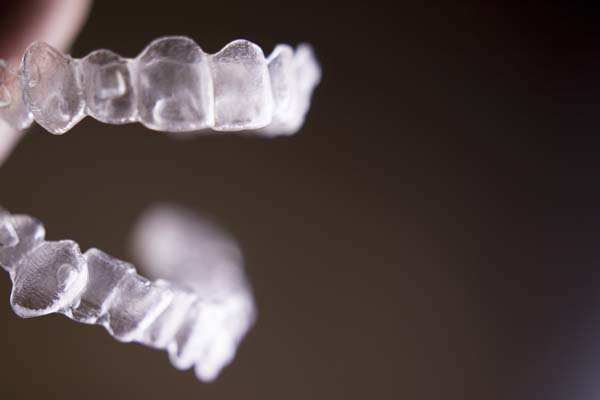
Invisalign® is one of the most common treatments used to address teeth straightening problems. General dentists recommend Invisalign® quite frequently due to the many associated benefits and ease of the treatment process.
One thing to know about Invisalign® is that it cannot address all orthodontic issues. However, it is a great option for misalignments and crowding, both of which can be detrimental to one's oral health and self-confidence. Keep reading to find out what Invisalign® can do.
Treat crowding and misalignments with Invisalign®
The following review highlights what Invisalign® can do for those who have crowded teeth or alignment issues. This information may be helpful to those looking into their treatment options.
The problem with crowding and alignment issues
Crowding can be detrimental to one's oral health because it can create hard-to-reach spaces between teeth. These spaces become susceptible to left behind food. When food gets stuck in these spaces, the result can be bacterial growth because it may be hard for a toothbrush or floss to access. Over time, this bacteria turns into plaque, which leads to tartar. When tartar does not get removed, serious restorative care will be required.
Misalignments of the teeth or arch can also be problematic. One's bite may be affected, which can make eating difficult. Additionally, over time, a misaligned jaw can lead to extra wear on certain teeth. Decay, chronic pain, or a TMJ disorder may occur, all of which can lead to headaches and malfunction.
What Invisalign® can do
Invisalign® can straighten out crooked teeth; however, an extraction may be necessary first. If the reason for the crowding is that there are too many teeth, an extraction may be required. If crowding occurs due to crookedness then Invisalign® treatment can likely start right away. Once crowded teeth are straightened out and evenly aligned, there will be fewer hard-to-reach areas, if none at all. One's oral hygiene routine should be able to be improved, which will in turn help encourage better oral health.
As far as misalignments, Invisalign® is a good option for cases that do not involve a serious jaw issue. When the teeth are simply misaligned, the aligners can significantly improve how they sit in the arch. However, jaw misalignments may require serious orthodontic attention such as braces or headgear.
Ultimately, Invisalign® can improve the health of the teeth, which will also lead to healthier gums, a stronger jaw, and a better-looking smile. A better-looking smile will improve confidence and self-esteem!
Find out more from a general dentist
When needing Invisalign® treatment, the best thing to do is start by consulting with a general dentist. The consultation allows the dentist to evaluate the teeth to determine the timeline and other important factors, such as additions to treatment. Additionally, the general dentist can answer questions or go over any existing concerns. To learn more about Invisalign® and what is involved, reach out today. Additionally, we can get you scheduled for an appointment.
Request an appointment here: https://edison.ismiledentalcarenj.com or call Premier Dental of Edison at (732) 272-0746 for an appointment in our Edison office.
Check out what others are saying about our dental services on Yelp: Invisalign in Edison, NJ.
Related Posts
Considering Invisalign®? Read on to learn more about this teeth-straightening option. Many individuals who desire to straighten their teeth and fix their smile's spacing problems can now opt for Invisalign®. Traditional metal braces used to be the only choice for orthodontic treatment, but many people struggled with them due to their appearance. Invisalign uses a…
Invisalign® is one of the most popular ways to undergo orthodontic treatment. General dentists are recommending teeth straightening via Invisalign® because of the many benefits that come with it. Having an understanding of these benefits may be helpful to those looking at their options. Keep reading to find out more. Below is an explanation of how comfort…
A root canal can save a severely damaged tooth. However, a sizable portion of the tooth will likely be gone afterward. The good news is that a restorative dentist can rebuild the treated tooth with a dental crown. While not always a requirement after root canal therapy, these restorations are often the final step in…
A smile makeover offers a fresh start for anyone looking to boost their confidence with a more radiant, balanced appearance. Oftentimes, this transformation involves much more than just a quick fix or a surface-level change. Choosing the right dentist ensures your plan respects the unique anatomy and overall goals.Dream results begin with a healthy foundation…